3 New Diversification Territories for Brands
For years, brand diversification followed a relatively predictable script. After licensing and merchandising came fragrances, then cafés, restaurants, and sometimes hotels.
Today, opening a café has almost become a strategic reflex. Yet while hospitality remains a relevant lever for some brands, it can no longer represent the sole horizon of diversification. In an unstable economic and cultural context, diversification remains essential. It allows brands to explore new markets, strengthen desirability, and embed their universe into consumers’ everyday lives.
In our Life & Style 2027 report, we explore diversification avenues that brands have barely invested in yet, but which respond to deep transformations in the way we live.
Here are three new territories of diversification for brands.
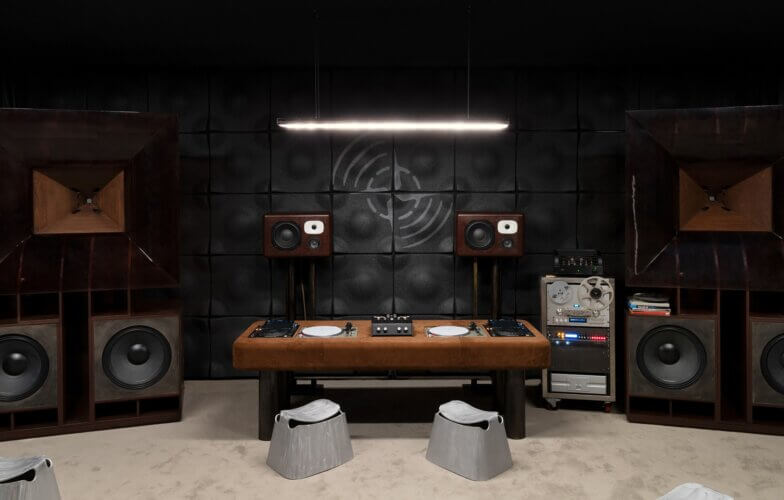
Magnifying Sound: Turning the Sonic Environment into a Brand Territory
In a world where noise pollution has become a major nuisance, rethinking sound has become urgent. It is a genuine societal challenge: we know that exposure to noise generates stress and depression, that hearing loss among young people has surged due in part to prolonged use of personal earbuds, and that older populations are naturally affected by hearing decline.
More importantly, sound must be designed so that it is no longer endured but chosen. In this new sonic awareness, designers are reimagining musical instruments through new materials and functionalities. At the same time, dedicated spaces are emerging to rediscover and appreciate sound, alone or collectively—because sound, as illustrated by the pianos installed in train stations, can foster encounters.
This spirit of exchange also takes shape in libraries—of vinyl records, sheet music, sound effects, or samples—or in shared instruments, transforming sound from a source of aggression into a collective pleasure.
Sound is becoming a true design territory. The Factotum project, presented by designer Lucas Muñoz Muñoz at Art Basel Miami, offers a striking illustration. The loudspeakers on display were made from industrial waste collected in the surrounding area just days before. Beyond the objects themselves, the project explores a new way of designing sonic devices: experimental, circular, and deeply connected to their context.
Becoming Inaccessible: The Strategic Value of Secrecy
Too many words, too much information, too many products—an overall degradation of exchanges and consumption. Faced with this overload that lowers standards, consumers seek to restore elevation, exclusivity, and distance.
Secret societies are making a comeback, as are places and communities built on inaccessibility, co-optation, and merit. Visiting clandestine addresses, reviving the mythology of the speakeasy. Investing in furniture reminiscent of vaults or private cabinets. Restricting access through locks, seals, codes—or through trials, interviews, sponsorships, or waiting lists. Moving through invisible train cars or armored vehicles… An entire culture of the confidential and the occult, borrowed from different eras and civilizations, expressed through an aesthetic as luxurious and precise as that of a Swiss bank.
Against the grain of the usual techniques used to capture consumer attention, this strategy of mystery and discretion brings back a more noble philosophy of commerce. Self-service distribution fades away. Etiquette implies the return of dedicated salespeople, counters that redefine hierarchy, and exclusive products hidden in drawers.
Consumption becomes a privilege once again—something to be earned, and reserved for those who truly appreciate its value.
Gentle Healing: Designing Objects and Spaces That Care
We have known pharmaceutical treatments, authoritarian injunctions, and the craze for all-natural solutions. Today, another path is emerging—neither brutal nor guilt-inducing.
A gentle, intelligent, and benevolent technology is now serving a holistic and contemporary vision of Health, encompassing both physical and mental well-being. Isolation pods designed to help users refocus in carefully crafted environments. Nearly futuristic sports equipment developed with ergonomics and intuitive use in mind. Connected kitchen utensils conceived as “smart tools” to promote well-being.
Hybrid musical instruments—somewhere between analog and digital—or neo–high-tech listening devices allow users to curate their own sonic landscape. Useful by nature, all these products share common features: clean lines, tactile materials, soothing colors, and simplified functionalities.
Nothing aggressive or intimidating—rather, a forward-looking aesthetic designed to provide immediate calm. Each object, service, and experience is conceived to improve daily life by encouraging movement, relaxation, and balance. The goal is preventive and respectful care, in harmony with each individual’s rhythm—with technology not as an adversary, but as an attentive partner.