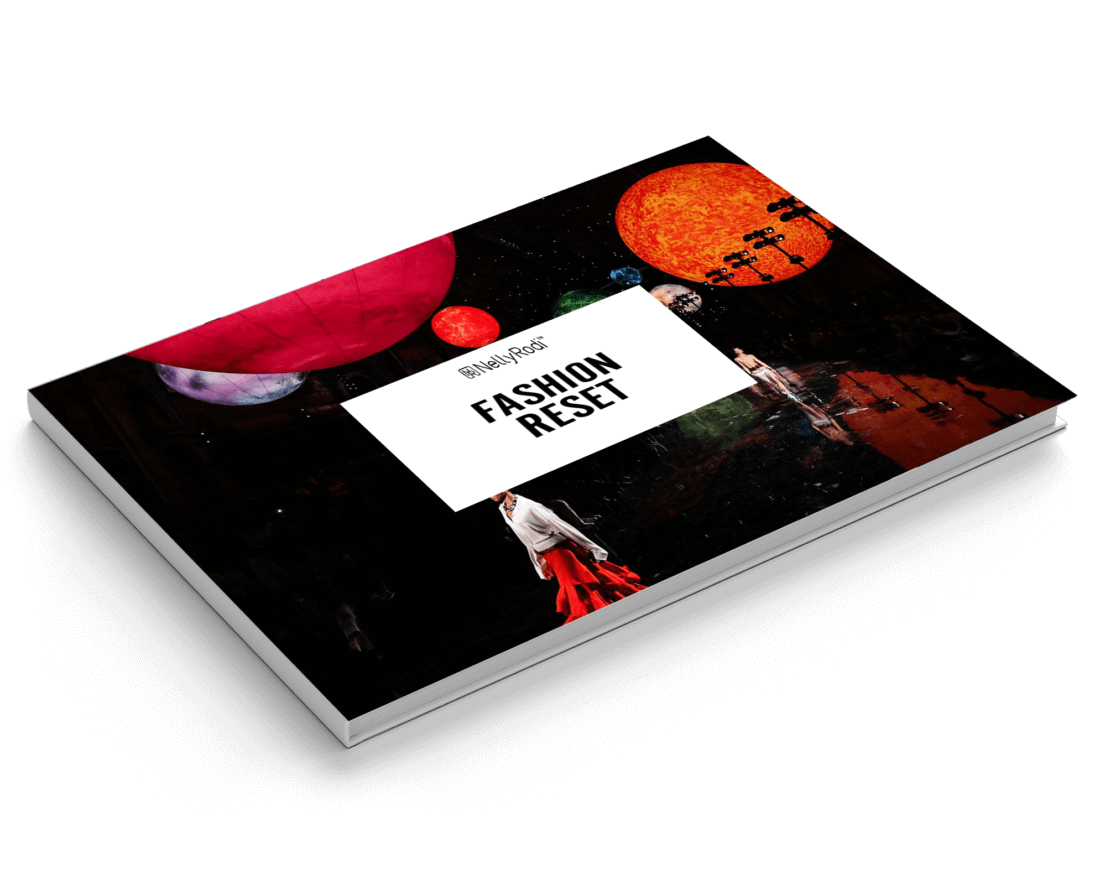
Fashion Reset: A Plea for a Less Fast Fashion Industry
The traditional hierarchy of fashion is collapsing.
Constantly dissected and filtered through a sociological lens, consumers now understand all its inner workings. They pick and mix freely between luxury and ready-to-wear, without any sense of hierarchy. On social media, they adopt the posture of image-makers and create new trends themselves.
This hyper-knowledge has profoundly redistributed power. Brands no longer speak to a passive audience: they address informed, demanding individuals who are capable of decoding marketing strategies and debunking inconsistencies.
But this hyper-lucidity comes at a cost… that of collective burnout. Consumers are saturated with newness, brands are pressured to react ever faster, and trends are exhausted before they have even truly existed.
In this context, continuing to accelerate is no longer a strategy. The true luxury may now lie elsewhere: in the ability to slow down and restore meaning. This is precisely the challenge addressed in our study Fashion Reset.
REINVESTING IN DESIRABILITY AND SINGULARITY
By chasing the same signals at the same time, many brands have ended up producing a homogeneous fashion landscape with nearly identical silhouettes. The pursuit of virality has gradually replaced the pursuit of singularity.
Reinvesting in desirability therefore means finding one’s own path rather than reacting to every weak signal, stepping away from reflex standardization, and embracing a vision that does not seek to please the widest possible audience.
RE-ANCHORING AND REFOCUSING
In recent years, many brands have prioritized image and the adrenaline rush of fleeting attention peaks over the solidity of an engaged community.
Refocusing requires shifting from a logic of audience to a logic of relationship. It is no longer about seducing an abstract public, but about understanding one’s community in depth — through data, certainly, but above all through qualitative observation, real-life uses, and deeper aspirations. Returning to a more client-centric understanding.
Who are those investing in the brand? Why do they choose it? How do they integrate it into their daily lives?
DE-BUZZING, RE-MATERIALIZING
To re-materialize is to place materiality, craftsmanship, gesture, intention, and know-how back at the center of the narrative. It also means revalorizing physical spaces: stores conceived as places of exchange with real people, and experiences that leave a mark beyond a twenty-four-hour story.
This is obviously not about abandoning digital, but about restoring it to its rightful place: a relay, not a substitute.
BUILDING AN ALTERNATIVE MODEL TO SHEIN & CO
Ultra-fast fashion has imposed a rhythm and an economic logic that are formidably efficient — producing quickly, in large quantities, and above all at very low cost. In response to this model, many now expect brands to offer a credible alternative — one that respects both nature and people, grounded in durability and responsibility, without sacrificing creativity.
The challenge is not to compete on speed. Fashion must understand that it can no longer be merely attractive; it must be meaningful.