Chanel: Of Suits and Men
“The answer is always the same: we have no plans for a men’s line.” In 2025, Chanel CEO Leena Nair reiterated that the house had no intention of launching a men’s ready-to-wear collection. That position was reaffirmed on June 30, 2026, in an article by Business of Fashion, where Bruno Pavlovsky, President of Chanel Fashion, confirmed that no dedicated menswear line was on the horizon. At a time when many luxury houses have turned menswear into a key growth driver, Chanel continues to pursue a different strategy.
Men are not absent from Chanel’s strategy, they’re simply not where you might expect them to be. As early as the Fall/Winter 2004 show, Karl Lagerfeld sent male models down the runway wearing Chanel looks. Since then, a handful of menswear pieces have appeared on the runway or been offered discreetly in select boutiques, through pop-ups or capsule collections with Pharrell Williams, fueling speculation that a permanent men’s line might eventually emerge. The arrival of Matthieu Blazy has only intensified those rumors.
Voir cette publication sur Instagram
Voir cette publication sur Instagram
But perhaps the real question isn’t whether Chanel will one day launch a menswear line. Rather, it’s how the house is already choosing to speak to men without creating one.
This approach is deeply rooted in Chanel’s history. The house built its identity around the emancipation of women. Gabrielle Chanel created her wardrobe by borrowing from the male wardrobe to liberate women. Masculinity has therefore been part of Chanel’s DNA from the very beginning, but always in service of femininity. It is precisely this dialogue between the masculine and feminine wardrobes that Matthieu Blazy now seems to be reactivating, not by creating a dedicated men’s line, but by opening up Chanel’s codes to a new male audience.
He introduces more explicit references to menswear: Charvet-inspired shirts, tailoring, roomier proportions, and more understated silhouettes. These elements make Chanel’s pieces easier for men to adopt without turning Chanel into a menswear brand. Rather than masculinizing the collection, Blazy is creating a new entry point into the Chanel universe.
Voir cette publication sur Instagram
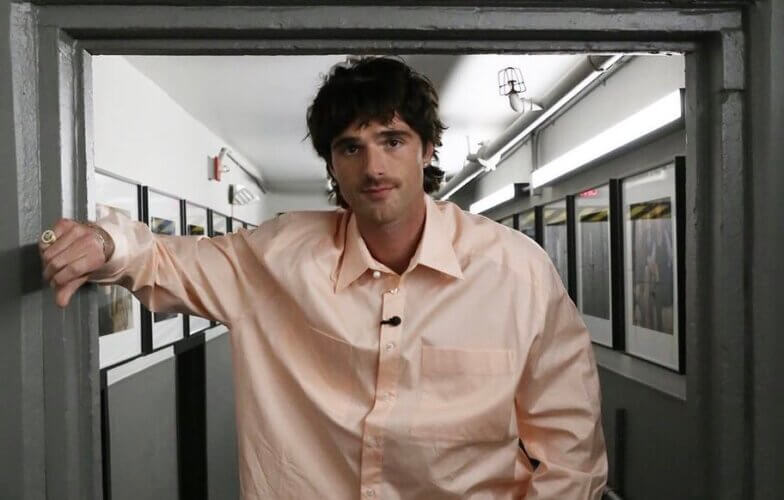
This shift is also visible in the house’s communication. The choice of ambassadors such as Kendrick Lamar, A$AP Rocky, Pedro Pascal, and Jacob Elordi goes beyond simple star power. They embody more sensitive, creative, and liberated forms of masculinity, reflecting a cultural moment in which the boundaries between men’s and women’s wardrobes are becoming increasingly fluid. By naturally wearing Chanel bags, jewelry, and clothing, they demonstrate that men no longer need a dedicated line to embrace the brand.
Voir cette publication sur Instagram
Voir cette publication sur Instagram
This strategy reflects a broader shift in consumer behavior. For decades, emancipation meant women borrowing from the male wardrobe. Today, the movement is becoming reciprocal. Men, too, are increasingly comfortable drawing from women’s wardrobes, sharing clothes with their partners, or wearing pieces without worrying about the category they belong to.
While most luxury houses are responding to this evolution through product strategy, Chanel is responding through desirability. Rather than building a menswear wardrobe, the house is inviting men into the Chanel universe. It is an approach that remains true to its heritage while expanding its audience without compromising its identity as a women’s brand.
More than a change of direction, Matthieu Blazy is extending an intuition that Karl Lagerfeld had already set in motion. He isn’t turning Chanel into a menswear brand; he’s bringing men closer to the Chanel universe. A strategy that perfectly embodies the word he chose to define the house: Modern.